September 2026
April
March 2026
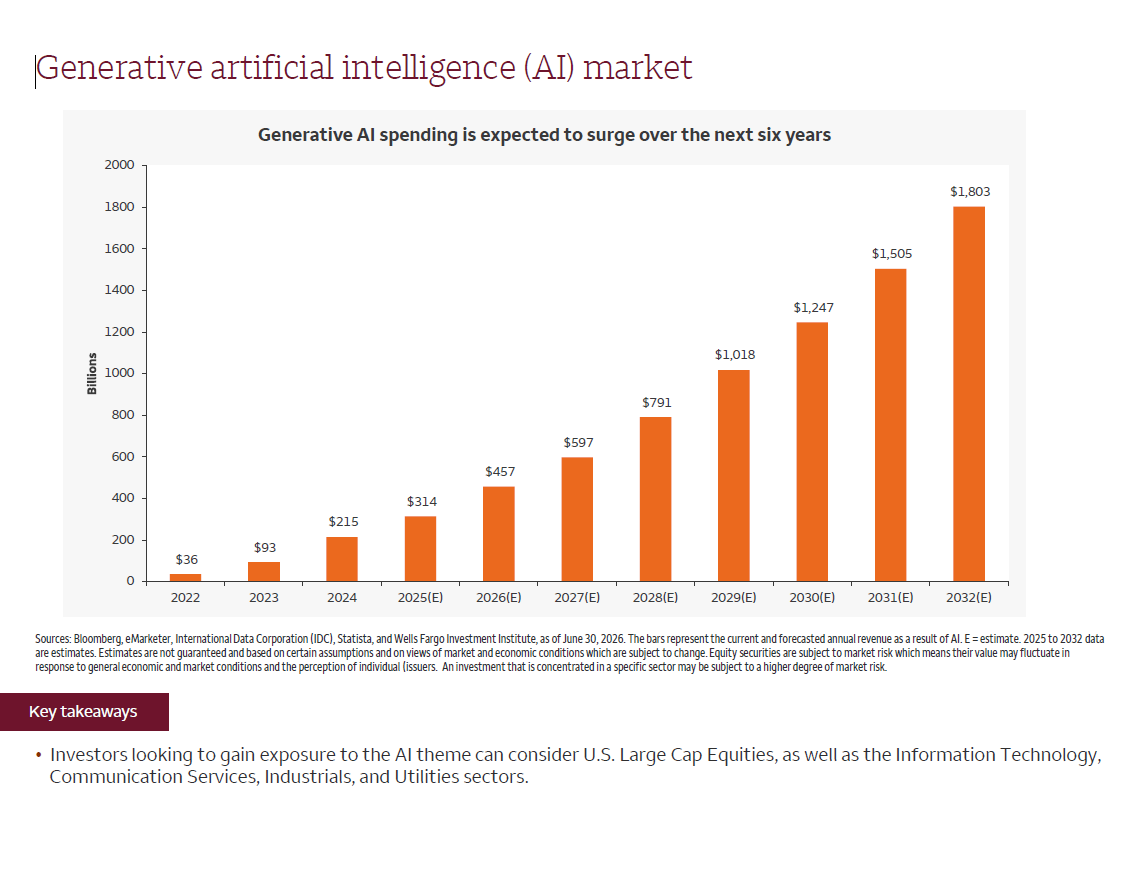
AI Isn’t a Bet on Technology — It’s a Bet on Productivity.
Artificial intelligence is rapidly moving beyond the technology sector and into the core operations of the global economy.
Across healthcare, financial services, energy, logistics, and customer service, AI is improving efficiency, decision‑making, and scalability. These are practical applications already influencing profitability and competitive positioning — not distant possibilities.
That said, AI’s expansion requires substantial investment in infrastructure, including data centers, computing power, and energy. This broadens the opportunity set beyond software alone, but also underscores the importance of selectivity, valuation discipline, and diversification as the theme matures.
Increased global competition and lower‑cost innovation may further accelerate adoption, potentially amplifying productivity gains — while also reinforcing the need to separate durable beneficiaries from short‑term enthusiasm.
For investors, the takeaway is clear: effective AI exposure is less about chasing individual winners and more about thoughtfully positioning portfolios for a structural shift, while remaining grounded in risk management and long‑term objectives.
Artificial intelligence is rapidly moving beyond the technology sector and into the core operations of the global economy.
Across healthcare, financial services, energy, logistics, and customer service, AI is improving efficiency, decision‑making, and scalability. These are practical applications already influencing profitability and competitive positioning — not distant possibilities.
That said, AI’s expansion requires substantial investment in infrastructure, including data centers, computing power, and energy. This broadens the opportunity set beyond software alone, but also underscores the importance of selectivity, valuation discipline, and diversification as the theme matures.
Increased global competition and lower‑cost innovation may further accelerate adoption, potentially amplifying productivity gains — while also reinforcing the need to separate durable beneficiaries from short‑term enthusiasm.
For investors, the takeaway is clear: effective AI exposure is less about chasing individual winners and more about thoughtfully positioning portfolios for a structural shift, while remaining grounded in risk management and long‑term objectives.
February 2026
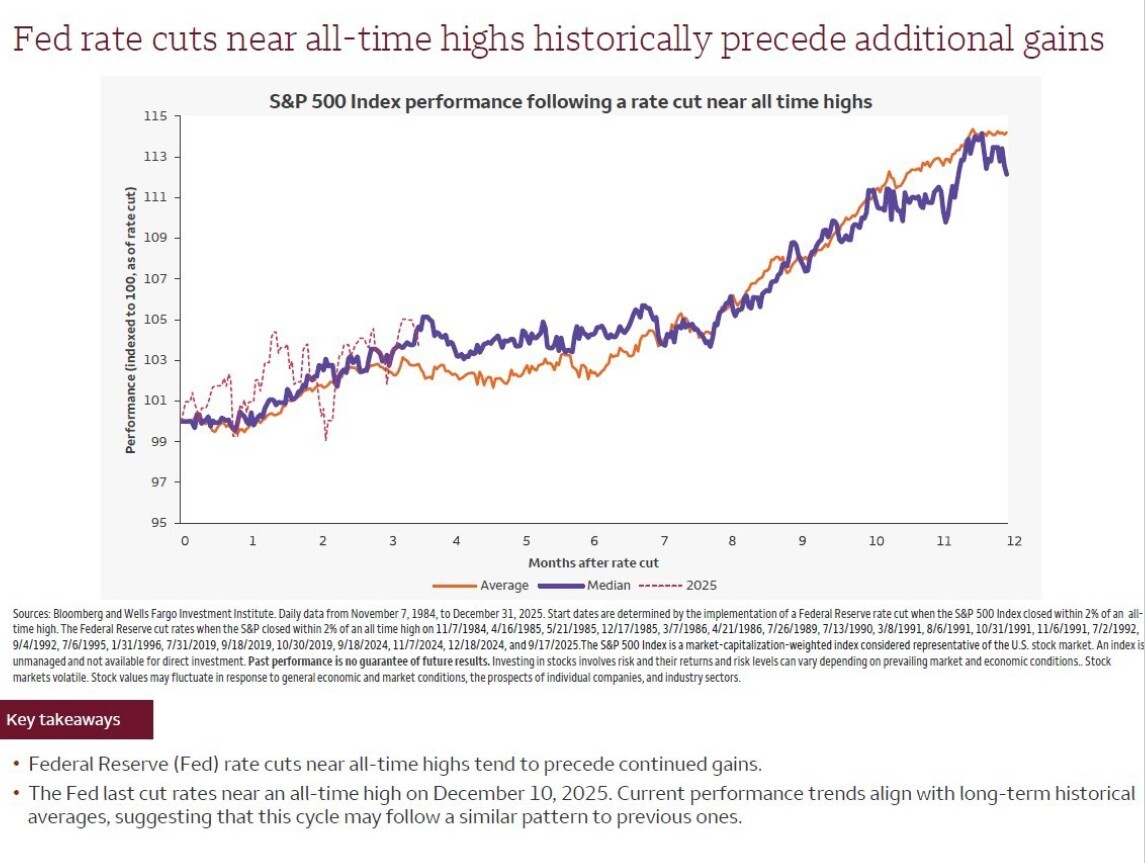
For more seasoned investors, this historical pattern offers an important signal: rate cuts occurring near equity market highs have frequently marked the start of an extended expansion phase, not the end of one. The chart illustrates that, on both an average and median basis, the S&P 500 has historically generated strong forward returns in the 12 months following similar policy shifts, as liquidity conditions improve and earnings expectations move higher. With the December 10, 2025 rate cut aligning closely with previous cycles, current price action appears consistent with long term market behavior rather than an outlier. While no historical analogue is perfect, the combination of easing financial conditions, resilient fundamentals, and trend matching market performance may support the case for maintaining — or selectively adding to — risk exposure within a disciplined framework. While past performance does not guarantee future results, understanding these trends can help provide useful context as investors navigate today’s evolving economic landscape.
Looking ahead to a big year for tax refunds in 2026
January 2026
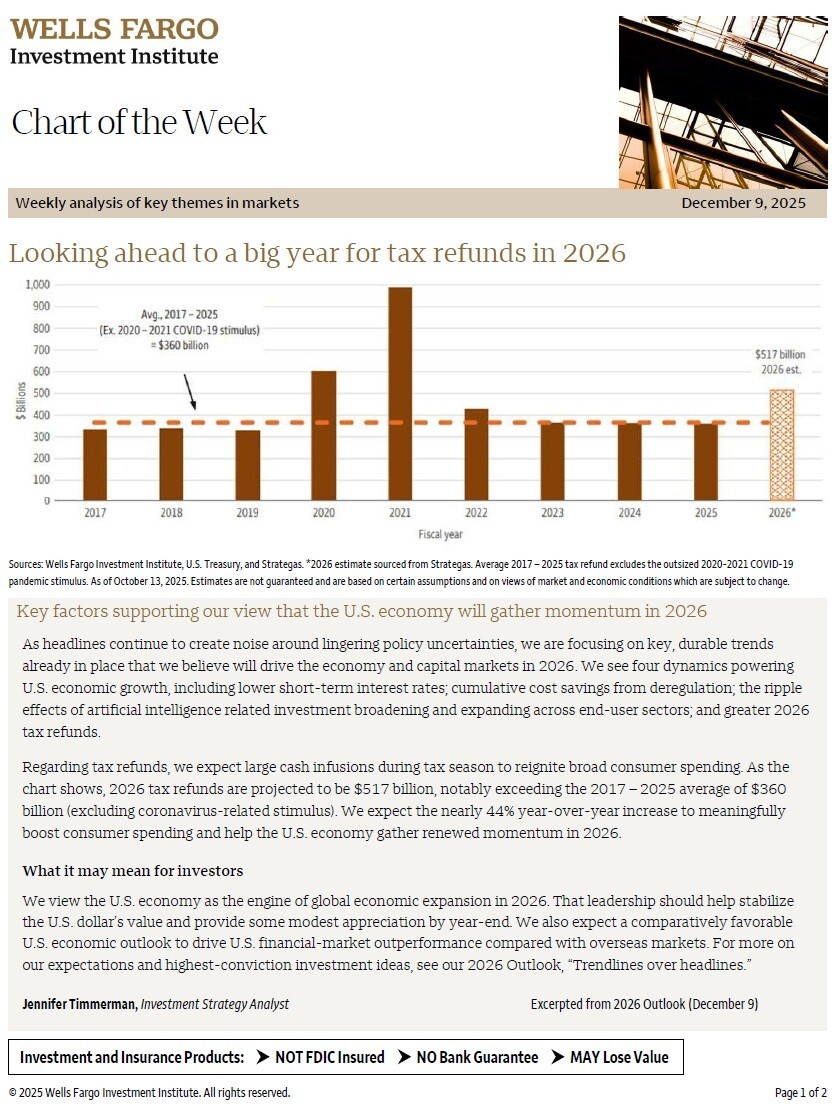
As headlines continue to bounce around, it’s easy to lose sight of the bigger picture. We find it useful to step back and focus on durable trends that are already taking shape and may influence the economy in the year ahead. The chart above highlights one of those trends—and why some expect consumer behavior and economic momentum to look different as we move into 2026. It’s a good reminder that planning isn’t about reacting to daily news, but about understanding how broader shifts can affect long term goals.
December
Staying the Course: A Lesson from Market History
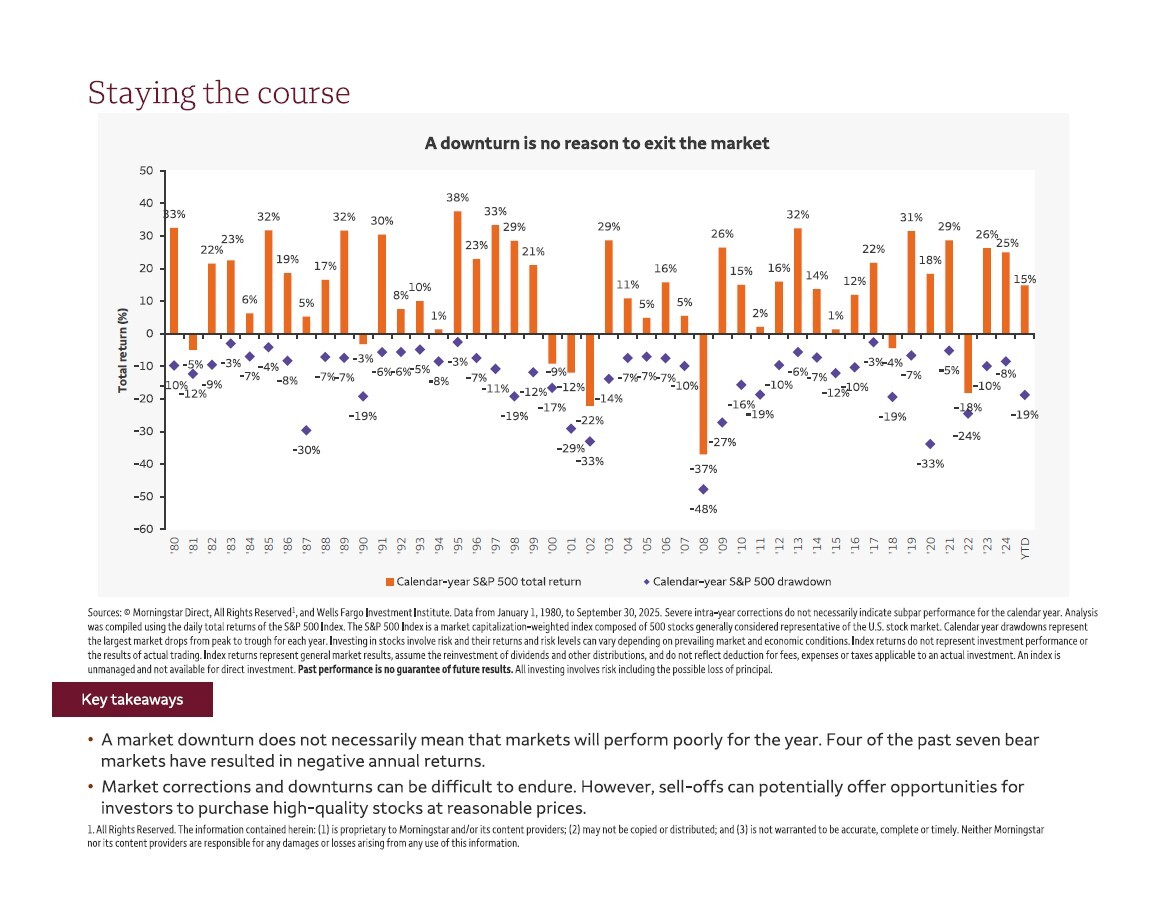
One of my favorite charts reminds us of an important truth: nearly every year, the S&P 500 experiences a period of negative returns—but more often than not, it finishes the year in positive territory.
From 1980 through 2025, the market has faced countless challenges—recessions, crises, and corrections. Yet, despite these intra-year drawdowns, the majority of calendar years ended with gains. This underscores a powerful principle: short-term volatility doesn’t dictate long-term outcomes.
For investors, this is a call to action:
✅ Resist the urge to react emotionally to downturns.
✅ Focus on your long-term goals.
✅ Remember that patience and discipline often pay off.
Market turbulence can feel uncomfortable, but history shows that staying invested has been a winning strategy more often than not.
Question for you: How do you keep perspective during market volatility?
One of my favorite charts reminds us of an important truth: nearly every year, the S&P 500 experiences a period of negative returns—but more often than not, it finishes the year in positive territory.
From 1980 through 2025, the market has faced countless challenges—recessions, crises, and corrections. Yet, despite these intra-year drawdowns, the majority of calendar years ended with gains. This underscores a powerful principle: short-term volatility doesn’t dictate long-term outcomes.
For investors, this is a call to action:
✅ Resist the urge to react emotionally to downturns.
✅ Focus on your long-term goals.
✅ Remember that patience and discipline often pay off.
Market turbulence can feel uncomfortable, but history shows that staying invested has been a winning strategy more often than not.
Question for you: How do you keep perspective during market volatility?
Stocks Are Not as Expensive as They Appear
November
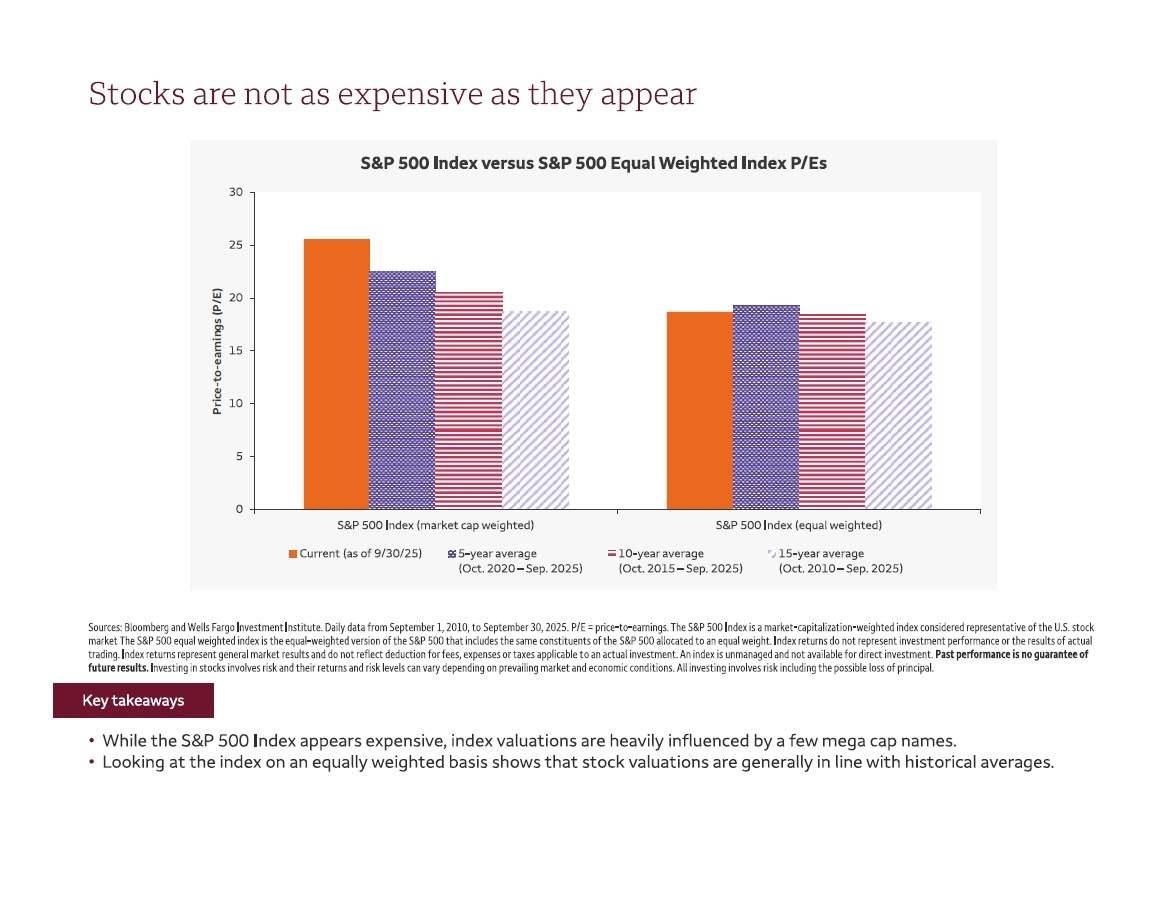
When looking at the S&P 500, headline valuations can seem elevated—but context matters. The traditional market-cap-weighted index is heavily influenced by a handful of mega-cap names, which skews the overall price-to-earnings (P/E) ratio higher.
However, if we examine the S&P 500 on an equal-weighted basis, the picture changes. Valuations are much more in line with historical averages, suggesting that the broader market isn’t as stretched as it might seem at first glance.
Key Takeaways:
Market-cap weighting amplifies the impact of a few large companies.
Equal-weighted analysis provides a more balanced view of overall stock valuations.
For investors, this reinforces the importance of looking beyond headline numbers and considering alternative perspectives when assessing market conditions.
📊 Data Source: Bloomberg & Wells Fargo Investment Institute
However, if we examine the S&P 500 on an equal-weighted basis, the picture changes. Valuations are much more in line with historical averages, suggesting that the broader market isn’t as stretched as it might seem at first glance.
Key Takeaways:
Market-cap weighting amplifies the impact of a few large companies.
Equal-weighted analysis provides a more balanced view of overall stock valuations.
For investors, this reinforces the importance of looking beyond headline numbers and considering alternative perspectives when assessing market conditions.
📊 Data Source: Bloomberg & Wells Fargo Investment Institute
October
October